Yellowstone Wolf
The northern range is the world's best wolf-watching.
Overview
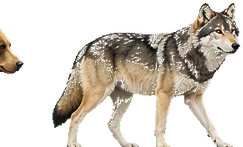
Gray wolves (Canis lupus) were eradicated from Yellowstone by the 1920s and reintroduced in 1995–1996 when 31 wolves from Canada were released. The population grew rapidly, peaked around 174 in 2003, and now fluctuates around 100 animals in roughly 10 packs.
Yellowstone — especially the northern range — is one of the best places in the world to watch wild wolves because of the open terrain, concentrated prey, and year-round road access. Every pack's territory is mapped from NPS monitoring data.
Where to find them
- Lamar Valley: The wolf capital — Lamar Canyon and Junction Butte packs hunt here at dawn.
- Slough Creek: Historic denning area; wolves often on surrounding slopes.
- Soda Butte / Little America: Eastern corridor of the northern range.
- Yellowstone Northern Range (whole): The road from Tower to the NE Entrance is the wolf-watching spine.
When to look
January through April are the most reliable months — snow makes wolves visible and prey concentrates in the valleys. Dawn is essential. Bring a spotting scope; wolves are often a mile or more away.
⚠️Stay at least 100 yd away
Frequently asked questions
Why were wolves reintroduced to Yellowstone?+
After 70 years without wolves, elk herds had grown very large and the ecosystem was out of balance. The 1995 reintroduction restored a top predator, triggering cascading effects — including the famous recovery of willow and beaver along some streams.
Do I need a spotting scope to see wolves?+
Usually, yes. Northern-range wolves are frequently a mile or more from the road. Binoculars find them; a scope (30–60x) is what lets you actually watch behavior. Many watchers share views — if you see a cluster of scopes, ask politely for a look.
How many wolves live in Yellowstone now?+
The 2024 NPS count was 108 wolves across 9 packs. The population peaked around 174 in 2003 and has since regulated lower as territories filled and natural mortality (chiefly wolves killing wolves) balanced reproduction.
Can I see wolves year-round?+
Yes, but winter and early spring are far easier — snow contrast, concentrated prey, and no foliage. Summer viewing is harder because wolves retreat to cover and heat.
Sources & data notes
- Wolf data is drawn from official NPS, USGS, and NOAA sources catalogued in our source registry. Observer-submitted sightings are not published on this public guide.
- Wolf carries dedicated official data (NPS ecology / management reports).
- NPS Yellowstone Wolf Project Report 2024 — National Park Service (Values may be parsed or inferred from annual report text.)
- NPS Yellowstone Wolf Project Report 2012 — National Park Service (Values may be parsed or inferred from annual report text.)
- NPS Yellowstone Wolf Project 95% MCP shapefiles — National Park Service (95% MCP convex polygons include unused area and do not indicate use intensity.)
Spotted something off, or want a deeper dive? Every claim above links to its original source — look for the ↗ markers and the Sources section.