Yellowstone Moose
Rare & declining — willow marshes, a real prize.
Overview
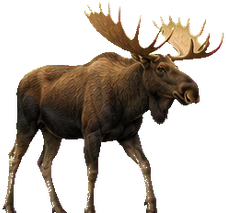
Moose (Alces alces) are willow-marsh specialists — they browse willow heavily and feed on aquatic plants in summer. They're the largest member of the deer family: a mature bull stands over six feet at the shoulder.
Yellowstone's moose population fell from roughly 1,000 in the 1980s to a few hundred today. The decline is linked to the 1988 fires (which restructured willow habitat), drought, ticks, and predation on calves — a real, documented drop that makes any sighting special.
Where to find them
- Willow Park (south of Mammoth): Classic willow-marsh habitat.
- Pelican Valley: Remote, wet moose country (closed much of the year for bears).
- Northeast Entrance marshes: Pullouts near the Lamar headwaters.
- Yellowstone River delta (NE): Aquatic feeding in summer.
When to look
Dawn and dusk, May–September. Scan willow edges for a dark, towering shape, often standing in shallow water.
⚠️Stay at least 25 yd away
Frequently asked questions
Why did the moose population decline?+
From ~1,000 (1980s) to a few hundred. Causes overlap: the 1988 fires altered willow habitat, drought and ticks stressed animals, and bears and wolves prey on calves. It's a real decline, not a perception.
Where can I see a moose in Yellowstone?+
Wet willow bottoms — Willow Park south of Mammoth, Pelican Valley, and the marshes near the Northeast Entrance. Dawn and dusk, scanning the willow tops for a dark towering shape.
Are moose dangerous?+
Yes — they charge more readily than they look like they will, especially cows with calves and bulls in fall. Keep 25 yards, more if it's a calf or rutting bull. A moose can run you down.
Sources & data notes
- Moose data is drawn from official NPS, USGS, and NOAA sources catalogued in our source registry. Observer-submitted sightings are not published on this public guide.
- Moose carries dedicated official data (NPS ecology / management reports).
- NPS Yellowstone mammals overview — National Park Service (Official mammal checklist/context page with current park-level population notes; not point data.)
- NPS Yellowstone wildlife overview — National Park Service (Official wildlife viewing and habitat context; not observation records.)
Spotted something off, or want a deeper dive? Every claim above links to its original source — look for the ↗ markers and the Sources section.