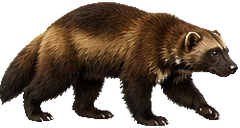
Yellowstone Wolverine
Among the rarest sightings in the park.
Overview
Wolverines (Gulo gulo) are the largest land mustelid — stocky, powerful, and tireless travelers with huge home ranges. They scavenge carrion and hunt, often in deep snow and rugged terrain that few other animals use.
Yellowstone has a very low-density, carefully monitored wolverine population. Most confirmed records come from remote winter backcountry via camera traps and tracks, not visitor sightings. A confirmed visual is exceptional.
Where to find them
- Remote high country: Specimen Ridge and similar rugged backcountry.
When to look
Winter–spring if at all — and realistically, you won't see one. Treasured for its rarity.
⚠️Stay at least 25 yd away
Frequently asked questions
Are there wolverines in Yellowstone?+
Yes, at very low density. They're monitored via camera traps, tracks, and genetics. Confirmed visitor sightings are extremely rare — most are in remote winter backcountry.
Why are wolverines so rare here?+
They need huge territories (hundreds of square km each), favor deep-snow denning habitat, and exist naturally at low density. The Greater Yellowstone population is small and carefully studied.
Are wolverines dangerous?+
To people, essentially never — they avoid us. They're fierce for their size (they'll drive wolves off carcasses) but pose no realistic threat to visitors.
Sources & data notes
- Wolverine data is drawn from official NPS, USGS, and NOAA sources catalogued in our source registry. Observer-submitted sightings are not published on this public guide.
- Wolverine is documented via NPS reference pages; no dedicated population time-series is in the public dataset.
- NPS Yellowstone mammals overview — National Park Service (Official mammal checklist/context page with current park-level population notes; not point data.)
- NPS Yellowstone wildlife overview — National Park Service (Official wildlife viewing and habitat context; not observation records.)
Spotted something off, or want a deeper dive? Every claim above links to its original source — look for the ↗ markers and the Sources section.