Yellowstone Red Fox
Elusive winter prize — three color morphs.
Overview
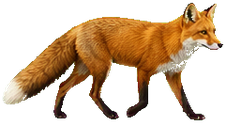
Red foxes (Vulpes vulpes) are the smallest of the park's wild canids. They hunt rodents by sound, leaping high and diving nose-first into snow — a behavior called 'mousing.' Yellowstone foxes come in three color morphs: red (most common), cross (dark band across the shoulders), and silver (nearly black).
Foxes are most visible in winter when their coats contrast against snow and they're driven to hunt in the open. They're smaller than coyotes with a bushier tail and a more delicate build.
Where to find them
- Northern range meadows: Lamar Valley and Blacktail Plateau in winter.
- Madison area: Reliable winter fox country.
- Mammoth fringes: Occasional near the developed zone.
When to look
Winter is best — the coat stands out on snow and hunting is visible. Dawn and dusk, open meadows.
⚠️Stay at least 100 yd away
Frequently asked questions
Why are there three colors of red fox?+
Genetic color morphs. Red is most common; 'cross' foxes have a dark band across the shoulders; 'silver' foxes are nearly black with white-tipped guard hairs. All are the same species.
What is the 'mousing pounce'?+
Foxes hunt mice and voles by sound under snow or grass. They tilt their head to pin the location, then leap high and dive nose-first into the snow — sometimes emerging with a rodent.
How is a fox different from a coyote?+
Foxes are much smaller (~12 lb vs ~30 lb), with a bushier tail (often with a white tip), more delicate build, and darker legs. Coyotes are taller, longer-legged, and more dog-like.
Sources & data notes
- Red Fox data is drawn from official NPS, USGS, and NOAA sources catalogued in our source registry. Observer-submitted sightings are not published on this public guide.
- Red Fox is documented via NPS reference pages; no dedicated population time-series is in the public dataset.
- NPS Yellowstone mammals overview — National Park Service (Official mammal checklist/context page with current park-level population notes; not point data.)
- NPS Yellowstone wildlife overview — National Park Service (Official wildlife viewing and habitat context; not observation records.)
Spotted something off, or want a deeper dive? Every claim above links to its original source — look for the ↗ markers and the Sources section.