Yellowstone Pine Marten
Forest mustelid — uncommon in conifer canopy.
Overview
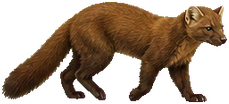
American martens (Martes americana) are small forest mustelids with semi-retractable claws that let them run head-first down tree trunks. They live in mature spruce-fir forest and hunt squirrels, voles, and birds in the canopy.
They're present but uncommon in the park's older conifer forests — sightings are a bonus, usually a quick dark shape darting across a trail or up a tree.
Where to find them
- Mature conifer forest: Spruce-fir across the park's higher, wetter areas.
- Lamar river trails: Occasional trail crossings.
When to look
Daytime, year-round. They're curious and sometimes investigate hikers.
⚠️Stay at least 25 yd away
Frequently asked questions
What is a pine marten?+
A small forest-dwelling mustelid (weasel family) about the size of a mink, with a bushy tail and a creamy throat patch. It lives in mature conifer forest and hunts in the canopy — it can run head-first down a tree.
Are pine martens common in Yellowstone?+
Present but uncommon. They favor older spruce-fir forest and are mostly seen as a quick dark shape in the canopy or crossing a trail. A good sighting is a quiet thrill.
Sources & data notes
- Pine Marten data is drawn from official NPS, USGS, and NOAA sources catalogued in our source registry. Observer-submitted sightings are not published on this public guide.
- Pine Marten is documented via NPS reference pages; no dedicated population time-series is in the public dataset.
- NPS Yellowstone mammals overview — National Park Service (Official mammal checklist/context page with current park-level population notes; not point data.)
- NPS Yellowstone wildlife overview — National Park Service (Official wildlife viewing and habitat context; not observation records.)
Spotted something off, or want a deeper dive? Every claim above links to its original source — look for the ↗ markers and the Sources section.