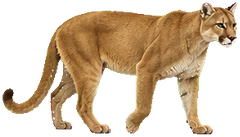
Yellowstone Mountain Lion
The ghost — a sighting is exceptional.
Overview
Mountain lions (Puma concolor) are solitary ambush predators that take deer and elk, mostly at dawn, dusk, and night. They're present across the park's rugged terrain but at very low density, and they avoid people.
Confirmed sightings are rare and almost always chance encounters at dawn or dusk in the northern-range cliffs and Tower area. Most 'mountain lion' reports are misidentified bobcats or coyotes.
Where to find them
- Northern range cliffs: Rugged terrain; essentially never seen.
- Tower area: Occasional chance encounters.
When to look
Dawn, dusk, and night — they're crepuscular/nocturnal. Realistically, plan to see other things.
⚠️Stay at least 100 yd away
Frequently asked questions
Are there mountain lions in Yellowstone?+
Yes, but at low density and rarely seen. They're the park's most elusive large carnivore — solitary, nocturnal, and people-averse. A confirmed sighting is exceptional.
How is a mountain lion different from a bobcat or lynx?+
Size and tail. A mountain lion is much larger (80–180 lb) with a long heavy tail. Bobcats and lynx are much smaller (15–30 lb) with short bobbed tails and tufted ears.
Are mountain lions dangerous to people?+
Encounters are extremely rare and attacks rarer still. They avoid people. If you do see one, don't run — make yourself large, back away slowly, and report any aggressive behavior to a ranger.
Sources & data notes
- Mountain Lion data is drawn from official NPS, USGS, and NOAA sources catalogued in our source registry. Observer-submitted sightings are not published on this public guide.
- Mountain Lion is documented via NPS reference pages; no dedicated population time-series is in the public dataset.
- NPS Yellowstone mammals overview — National Park Service (Official mammal checklist/context page with current park-level population notes; not point data.)
- NPS Yellowstone wildlife overview — National Park Service (Official wildlife viewing and habitat context; not observation records.)
Spotted something off, or want a deeper dive? Every claim above links to its original source — look for the ↗ markers and the Sources section.