Yellowstone Bighorn Sheep
Cliff specialists — November rut head-clashes.
Overview
Bighorn sheep (Ovis canadensis) are built for steep, rocky ground: split hooves with rubbery pads for grip, keen eyesight, and a low center of gravity. They escape predators simply by going where nothing else can follow.
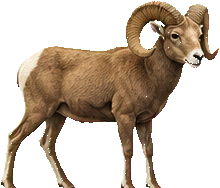
To find them, scan cliffs, talus slopes, and high ridges with binoculars. Rams have full-curl horns; ewes have short sickle-shaped horns.
Where to find them
- Mount Washburn & Dunravan Pass: Sheep on the slopes above the road (summer/fall).
- Gardiner / North Entrance: Ewes and lambs on the cliffs year-round.
- Specimen Ridge: Remote high country for rams.
When to look
Daytime, summer and fall. The November rut brings echoing head-clashes between rams.
⚠️Stay at least 25 yd away
Frequently asked questions
How do I tell a ram from a ewe?+
By the horns. Rams have large, tightly curled horns that form more than a full circle; ewes have shorter, slighter horns that curve back like a sickle without curling. Rams are also much larger.
When is the bighorn rut?+
November. Rams compete for ewes by rearing up and crashing their horns together — the clashes echo across the ridges. Dramatic but harder to watch than the elk rut (rugged terrain).
Where can I see bighorn sheep?+
Steep rocky terrain — Mount Washburn and Dunravan Pass in summer/fall, and the Gardiner/North Entrance cliffs year-round. Scan rock faces with binoculars.
Sources & data notes
- Bighorn Sheep data is drawn from official NPS, USGS, and NOAA sources catalogued in our source registry. Observer-submitted sightings are not published on this public guide.
- Bighorn Sheep is documented via NPS reference pages; no dedicated population time-series is in the public dataset.
- NPS Yellowstone mammals overview — National Park Service (Official mammal checklist/context page with current park-level population notes; not point data.)
- NPS Yellowstone wildlife overview — National Park Service (Official wildlife viewing and habitat context; not observation records.)
Spotted something off, or want a deeper dive? Every claim above links to its original source — look for the ↗ markers and the Sources section.